Data governance (DG) has become one of the key themes of information management. Data leaders in corporate organizations are feeling the need to put data governance into practice. Changing business models, technology democratization, security, and increasing digital assets have made data governance the need of the hour.
This blog establishes a framework and the components that organizations can use to start or improve their DG efforts.
One key point organizations need to consider: it is sometimes difficult to attach DG efforts to any business outcome or analytics initiative. While these efforts may not result in any direct business benefit, they do influence the success of all data initiatives in the organization. This is the base capability that needs to be built, and it’s recommended to keep these efforts in mind for any upcoming or ongoing programs centered around data.
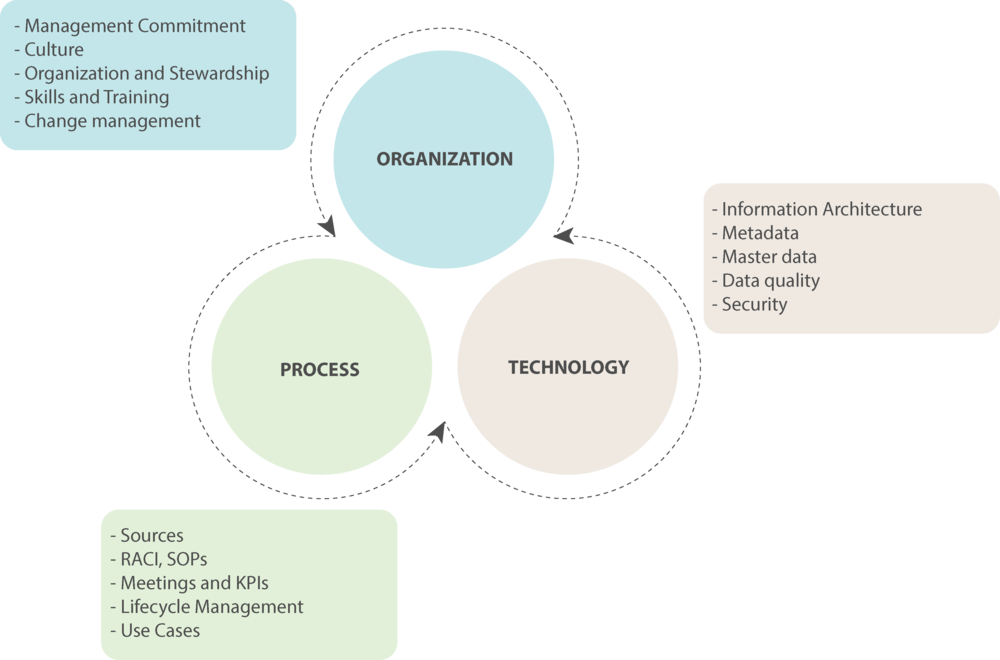
Three Spheres of Data Governance
Following are the three aspects that organizations need to consider in any successful governance effort. These three broad aspects are labeled as the three spheres of Data Governance.
Organization Sphere
Organization refers to the people part of the enterprise — and the part I consider most important in the DG journey. This is the “Who” part of the framework. The success of any efforts, including data governance, is based on the readiness of the organization.
These efforts are implemented at the grassroots level where rubber meets the road, but the commitment from top leadership and sponsors directly impacts the success of the efforts. The commitment from management and the readiness of the organization to embrace the need and change are the key areas enterprises need to focus on when starting the data governance journey.
Process Sphere
This is the “How” part of the framework. The Process sphere refers to the key elements that organizations can use to implement a successful DG structure. The focus is on where data is generated, how it needs to be processed, what are the tollgates that data will pass through, and how it will impact the data supply chain.
The measurement of the DG process is also important — there needs to be defined qualitative and quantitative success criteria.
Technology Sphere
This is the “What” part of the framework. This sphere is also referred to as architecture components, or the tools and technologies that need to be set up for the success of the initiatives.
The information architecture and architecture patterns set the foundation for how data is generated, processed, and consumed. The architecture components need to be combined with metadata management, master data management, data quality, and data security to complete the key aspects of the technology sphere.
There may be a need for specialized tools in each component of this sphere that might require additional cap-ex and op-ex commitments. Specialized tools boost and speed up the efforts and need to be carefully evaluated for the success of the program.
To keep this blog short and relevant, these are summarized at a high level. The detail of each sphere and its components are covered in dedicated follow-up blogs.